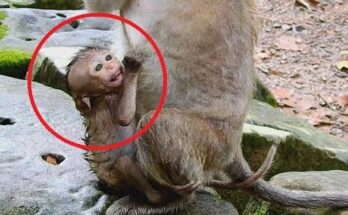
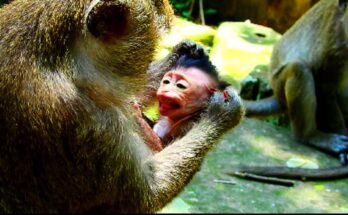
“Amari Take Polly To Tear and Throw Into The Water, This Female Monkey Really Hate Baby” is a shocking and emotionally intense scene that immediately grips the viewer’s attention. The moment begins with little Polly innocently staying close, unaware of the sudden danger approaching. Amari’s behavior changes quickly, her movements tense and restless, creating an atmosphere filled with unease. What follows feels almost unbelievable, as the fragile peace is broken by chaos that leaves onlookers stunned and heartbroken.
Tiny Polly, still so dependent and vulnerable, cannot understand why the situation turns frightening. His small cries echo with confusion as he struggles to keep balance and safety. The tension rises when Amari handles him roughly, her actions appearing harsh and unpredictable. To anyone watching, it feels like time slows down, every second stretching painfully as concern grows for the helpless baby. The sight is difficult to witness, stirring deep sympathy and worry for the little one’s well-being.
Yet moments like this in the animal world can be complicated and easily misunderstood. What looks like hatred or cruelty may actually be driven by stress, instinct, or environmental pressure. Female monkeys sometimes react strongly when they feel threatened, anxious, or overwhelmed, especially in situations involving food competition, territory, or social hierarchy. While it may appear that Amari “hates” the baby, her behavior could be a response to tension rather than true aggression rooted in emotion as humans interpret it.
Polly’s cries and attempts to cling show his natural instinct to seek safety and comfort. His tiny body trembles, and his voice rises as he tries to signal distress. These sounds tug at the heart, making viewers feel protective and deeply emotional. It is a powerful reminder of how fragile young animals are and how strongly we react when we see vulnerability in danger.
Scenes like this can be hard to watch, but they also reveal the raw reality of life in the wild or in complex social groups. Survival, hierarchy, and instinct often shape behavior in ways that seem harsh through human eyes. In the end, the moment is filled with tension, sadness, and concern, leaving viewers with heavy hearts and lingering questions. It is a dramatic reminder that nature can be both tender and tough, and that not every action we see has a simple explanation, even when it brings tears to our eyes.