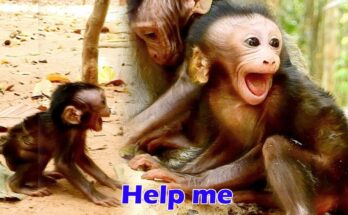
t was a painful and distressing moment to witness as baby monkey Polly faced one of the hardest days of her young life. During the harsh weaning process, Popeye showed little patience, forcing Polly down onto the ground while she struggled on one tiny leg. Confused and frightened, Polly cried desperately, her small voice growing louder with each second. The stress overwhelmed her fragile body, and soon her face turned purple from crying so hard, a heartbreaking sign of fear and suffering.
Polly’s tiny body trembled as she tried to crawl closer, seeking comfort and milk, but Popeye pushed her away again and again. Being forced onto the cold ground made the situation even worse. Polly slipped awkwardly, unable to balance well, relying heavily on one leg as she cried. The pressure and fear caused her to lose control, and she soiled herself in distress. This was not stubborn behavior—it was a baby reacting to intense emotional and physical stress.
Her cries echoed, sharp and full of panic. Tears filled her eyes as she reached out instinctively, hoping for warmth and reassurance. Instead, she was met with rejection. The weaning was not gentle or gradual; it was sudden and rough. Polly did not understand why the milk she depended on was taken away so abruptly. All she knew was hunger, fear, and confusion.
Popeye’s harsh behavior left Polly exhausted. After crying until her face darkened with strain, her small chest heaved rapidly as she struggled to catch her breath. Her body showed clear signs of trauma from the stress—weak movements, shaking limbs, and a defeated posture. She lay low on the ground, no longer fighting, her energy drained by fear and heartbreak.
This moment revealed how damaging rough weaning can be for a baby so young. Polly was not ready—neither physically nor emotionally. Instead of learning independence, she was forced into fear. The lack of comfort turned a natural process into a traumatic experience, leaving her vulnerable and shaken.
Baby Polly’s suffering reminds us how delicate young lives are. Weaning should be guided with patience and care, not force. Her purple face, her desperate cries, and her helpless state on the ground show the deep impact of cruelty and neglect. Polly needed protection, gentleness, and understanding—not fear. Her story stands as a painful reminder that compassion is essential when guiding the weakest through difficult transitions.