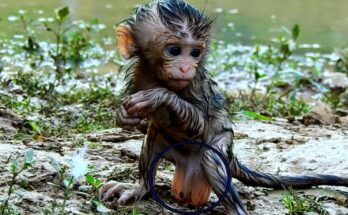
The heartbreaking scene unfolds with tiny Sweetpea’s cries echoing again and again, filling the air with desperate pleas that seem to last a million times over. His small voice trembles with hunger and confusion as he reaches toward his mother, Popeye, hoping for comfort, warmth, and the nourishment he so badly needs. But instead of the gentle reassurance he longs for, Sweetpea is met with distance. Popeye turns away, leaving the fragile little one alone with his empty stomach and growing fear. Each whimper grows louder, each call more urgent, as if he believes that if he cries hard enough, she might finally understand.
Sweetpea’s eyes glisten with tears, his tiny body shaking with weakness. He doesn’t understand why the one he depends on most won’t feed him. Instinct drives him to keep calling, to keep begging, to keep hoping. The forest around him feels too big, too quiet, too cold for such a small soul. His cries are not just sounds—they are messages of need, signals of trust, and symbols of a bond he believes should never break. Yet Popeye remains unmoved, focused elsewhere, as though unaware of the storm of distress rising behind her.
Watching Sweetpea struggle tugs painfully at the heart. His innocence makes the moment even more emotional, because he doesn’t know anger or blame—only need. He still believes his mother will turn around, that she will gather him close and let him nurse peacefully. That hope keeps him calling out, even when his voice grows hoarse and faint. The contrast between his persistence and her indifference creates a scene that feels almost unbearable to witness.
This story is not just about hunger; it is about longing, instinct, and the fragile bond between mother and child. Sweetpea’s cries carry a message that reaches far beyond words, reminding us how deeply young ones rely on care and protection. As his tiny calls fade into soft whimpers, one question lingers in the air: will Popeye finally respond before Sweetpea’s strength runs out, or will his desperate pleas continue unheard?