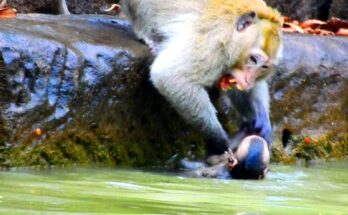
In the heart of the forest, where sunlight flickers gently through layers of green leaves, a tiny baby monkey clings to a branch and cries out in helpless desperation. His small voice, trembling and high-pitched, echoes through the trees as if begging the world for comfort: “Oh no…! Please take me, give me milk, and hug me!” The heartbreaking call raises a question many people ask when they witness similar scenes in wildlife: Why does a monkey mother sometimes appear to ignore her crying baby?
To human eyes, a mother turning away from her crying infant looks harsh and unloving. But in the animal kingdom, things are rarely as simple as they seem. Mother monkeys, especially in species like macaques or langurs, follow instinctual parenting behaviors shaped by thousands of years of survival. Their actions, however confusing or cold to us, often have deep biological reasons.
Sometimes, a mother monkey ignores her baby because she is teaching it independence. In the wild, young monkeys must quickly learn to cling, balance, and move confidently, or they risk falling behind the troop. A baby that cries for constant attention may not develop the necessary physical strength and alertness. By stepping away, the mother encourages her infant to explore, adapt, and become resilient.
In other cases, the mother may be exhausted, stressed, or even inexperienced. First-time monkey mothers sometimes struggle to understand their infants’ needs. They may pause before responding or make mistakes while learning how to nurse or hold their babies properly. What looks like rejection may simply be confusion or fear.
There are also social factors. In some species, dominance hierarchies influence mother-infant interactions. A low-ranking mother may be too anxious to focus on her baby when higher-ranking members are nearby. Her attention is divided between protecting herself and keeping her baby safe, even if that means momentarily ignoring its cries.
Of course, there are heartbreaking moments when a mother senses that her infant is too weak or ill to survive. In nature, animals instinctively invest their energy in the offspring most likely to thrive. While difficult for us to accept, this behavior ensures the survival of the group as a whole.
Yet despite these explanations, the sight of a baby monkey crying, reaching out for warmth and milk, touches something deeply emotional in us. It reminds us that all creatures—no matter how different—share the universal need for love, security, and connection.
Nature can be tender, but it can also be painfully tough. And sometimes, between those branches and shadows, we witness both realities at once.Attach